Here we consider the design and evaluation of a high-throughput screening system for investigating the biological effects of microwave and millimetre-wave radiation.
The approach presented here differs significantly from others with the deployment of a continuous-culture device and sample handling technology that allows for the rapid presentation of test samples in a uniform physiological state.
The millimetre-wave exposure cell was operated as a flow-through device. To remove convolution-by-flow effects this was combined with a segmentation scheme. A sensitive bioluminescence-based reporter monitored the temporal evolution in each assay segment using optical detector arrays mounted at three observation points: - pre-millimetre-wave exposure, syn- exposure and post-exposure.
With this approach, the continuous monitoring of bioluminescence may be used on different time scales to measure energy metabolism, gene expression and growth. Exposed and control samples were monitored and any combination of stimulus parameters, namely, radiation frequency, intensity and polarization (or any modulation of these), which induced a response that exceeded a noise threshold of the system could be further investigated automatically in real-time.
The device could screen systematically or use feedback to automatically investigate a region of interest at increasing resolution in parameter space. Environmental parameters such as temperature and magnetic and electric fields were carefully controlled. The instruments operation was characterized over the 26 and 40 GHz frequency range and this gave confidence that the technique could be applied to the entire mm-wave range. This sensitive "active" search system may have application in industry, biomedical research and environmental health.
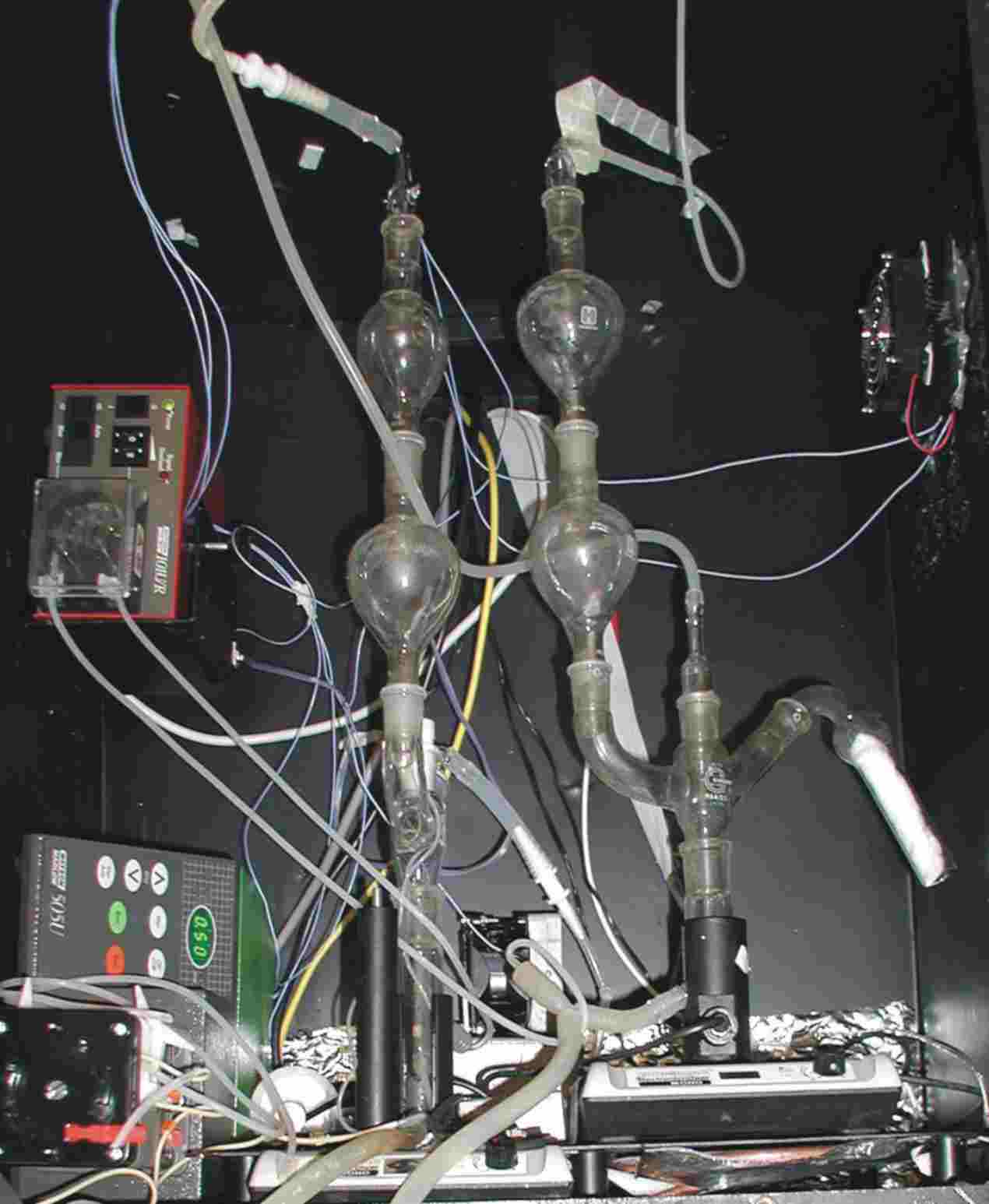
Contiuous culture device, as used in high-throughput screening system
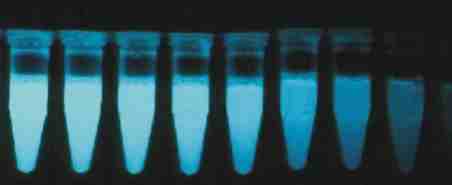
Inhibition of bioluminesence by toxicant
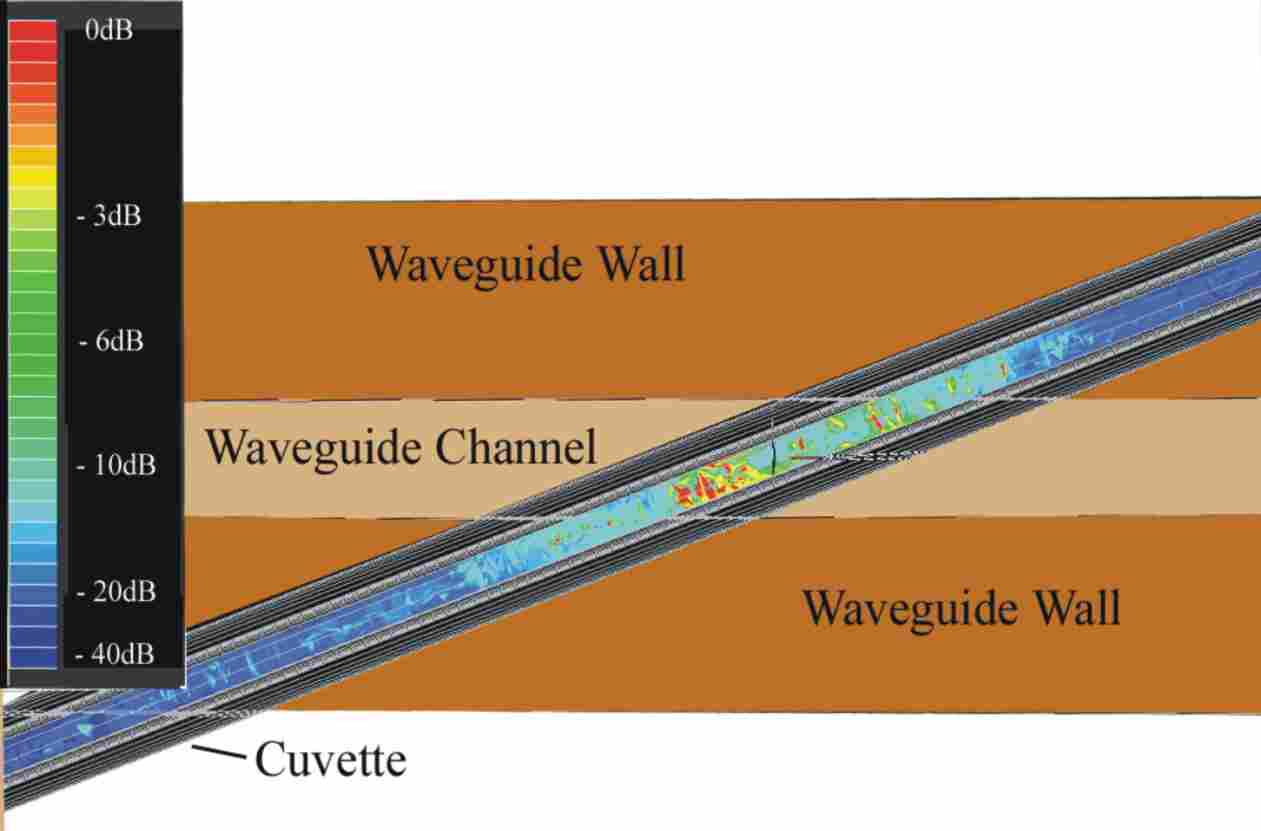
Distribuiton of SAR (Specific absorption rate) in cell
A pdf version of my thesis:
Chapter1: Theory
Chapter 2: Experimental Evidence
Chapter 3: Description of the Instrument
Chapter 4: Continuous Culture of Photobacterium
Chapter 5: The Exposure Cell
Chapter 6: Results
Chapter 7: Discussion and Conclusions
Complete Thesis (5.5 Mb)